Logo

Becoming a Pilot Made Easy

Here’s What You Need to Start Your Pilot Training

iconimage

English Language Skills

To effectively pursue your dream of becoming a pilot, you must have the ability to read, write, and understand English clearly, as it's essential for communication in aviation.
iconimage

Minimum Age Requirement

You can start flight training at 16 years of age and are eligible to apply for CPL by the time you turn 18, as the training process takes approximately a year.
iconimage

Educational Qualifications

To become a Pilot in India, you must have completed 10+2 with Physics and Mathematics. If you don’t have Physics and Maths in regular schooling, you can complete these subjects through NIOS (National Institute of Open Schooling) or an equivalent recognised board.
Medical Fitness

Fitness Requirements to Become a Pilot

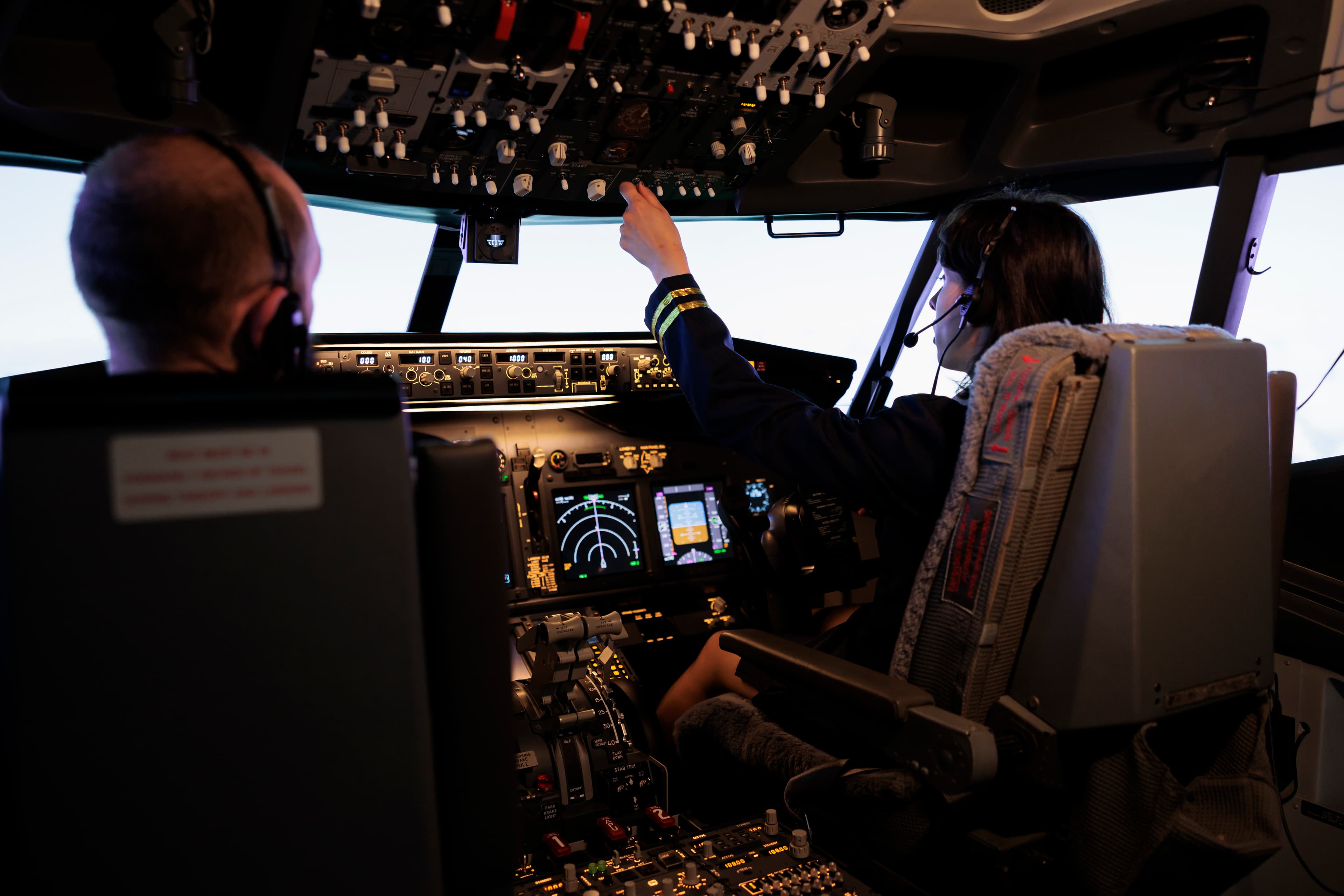
Before beginning your pilot training journey, it's essential and mandatory to confirm you're medically fit to fly. The medical evaluation involves two stages.

Class 2 Medical Examination: This is the first step and can be conducted anywhere in India by DGCA-authorized medical examiners. After the examination, you’ll receive a CA-35(Having validity of 2 years)assessment form, which serves as your fitness certificate. Your medical reports are then forwarded to the DGCA for review, and a formal medical assessment is issued afterward which is valid for a time period of 4 years as per new norms.
Class 1 Medical Examination:The initial Class 1 assessment is only available at designated centers in five cities: Mumbai, Bengaluru, Delhi, Chennai, and Jorhat. You can apply for a Class 1 assessment only after receiving your Class 2 medical clearance from DGCA.
Once your Class 2 assessment is completed, a unique file number will be assigned to you and printed on the assessment document. This file number is permanent and will be used for all future communication and documentation with the DGCA.

How to Become a Pilot in India: Components of CPL

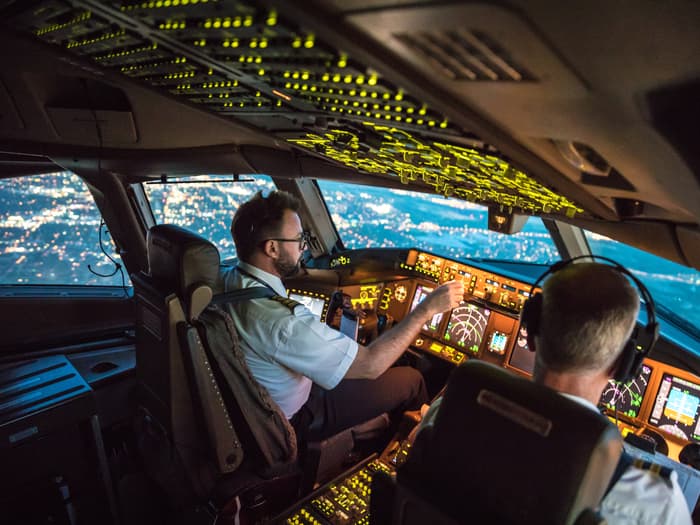
Commercial Pilot License can be obtained only after you have completed the CPL training. When you plan to become a pilot in India, the first course of action is to enroll in CPL classes. There are two core components of the entire training program, named Ground Classes & Flight Training. As the names indicate, Ground classes are more about understanding how the ground staff and requirements work along with theoretical understanding of the concepts. When we talk about flight training, it gives practical understanding of how a flight works, what are the basic and advanced features of a cockpit and more importantly, it gives you flight experience which is vital to become a pilot in India.

Flight training provides hands-on experience, covering both basic and advanced cockpit operations. Most importantly, it gives you real flight hours, which are essential to becoming a commercial pilot in India.
CPL Program
Medical Fitness

CPL Theory Exams

To appear in the CPL Theory exams, you must have an understanding of the following -

Computer Number: Before you can appear for the theory exams, it is mandatory to obtain a DGCA Computer Number. Once online registration formalities are done, you must upload the required attested documents according to the guidelines . Failure to do so will result in your application being rejected.
Exam Schedule & Pattern :DGCA conducts theory exams for all subjects four times a year(Regular Attempt) and ondemand exams every month having limited seats. The DGCA exams are in a multiple-choice question (MCQ) format. With proper preparation and dedication, clearing these exams is quite achievable.
Subject RequirementsThe specific theory papers you need to clear will depend on whether your flight training school is based in India or overseas. The table given below for a clearer understanding of the subject requirements based on your training location.

DGCA Exam Eligibility

Comprehensive guide to DGCA examination requirements for flight training programs

Flight Training In India

Navigation
Meteorology
Regulations
Technical General
Technical Specific
RTR

Flight Training Abroad

Navigation
Meteorology
Regulations
Navigation
Meteorology
Regulations
RTR

RTR - Radio Telephony Restricted

(Aeronautical Communication Certification)
Medical Fitness

Get One Step Closer to Becoming a Pilot with Pilots Pathway

Selecting the right flight school is crucial as it helps you build your future skills as a professional pilot. That’s why choosing a reputable flight training institute like PilotsPathway is key to shaping your aviation career. To become a pilot with all the necessary skills, finding the best flying institute is important.

    If you are in the market looking for an ideal flying school to help you with CPL training, you must consider the below factors when evaluating your options. Ask the right questions like:

  • Is the flying school DGCA-approved and does it offer training at global standards?
  • Is there a balance of flying in both controlled and uncontrolled airspaces?
  • Will you gain experience communicating in busy international airspace?
  • Does the institute provide robust instrument flying training?

If you are thinking that going abroad for pilot training is a better option, you must know that you will need to pursue dual license training for achieving both international and Indian licenses. At PilotsPathway, we offer some of the best trainers and resources helping you achieve the best knowledge and fulfill your dream to become a pilot without having to pay a significantly large fee for study abroad programs.

DGCA Requirements

100 HOURS PILOT IN COMMAND (PIC)
100 HOURS PILOT IN COMMAND (PIC)

40 HOURS INSTRUMENT
40 HOURS INSTRUMENT

10 HOURS NIGHT FLYING (5 HRS DUAL | 5 HRS SOLO)
10 HOURS NIGHT FLYING (5 HRS DUAL | 5 HRS SOLO)

50 HOURS SOLO CROSS COUNTRY

50 HOURS SOLO CROSS COUNTRY

15 HOURS MULTI ENGINE

15 HOURS MULTI ENGINE

Flight Training In India

Clear all applicable DGCA theory papers
Complete flight training as per DGCA regulatory standards
Undergo flying skill checks with a DGCA-appointed examiner
Issuance of CPL upon submission of documents to DGCA

Flight Training Abroad

Clear all applicable DGCA theory papers
Obtain your Commercial Pilot License abroad
Return to India
Appear for flying skill checks with a DGCA-appointed examiner
Issuance of CPL upon submission of documents to DGCA

Know The Process - How To Become A Pilot

Process Steps

11 steps to complete

1

Class II Medical Examination

A Class II medical is a mandatory step that must be completed before one can apply for a Class I Medical, which is needed for Commercial Pilot Training. It is an initial medical certification required for all aspiring pilots before obtaining their Private Pilot License. To apply for a Class II medical you can visit the official DGCA Medical Portal and choose an empanelled DGCA Class II Medical Examiner from your preferred city or location. Thereafter you can schedule an appointment with the selected examiner. You will be asked about any pre-existing medical conditions and undergo a color vision test, BMI check, and a general health assessment. Only upon successfully passing this Class II medical test can you proceed to apply for your Class I medical, which is essential for CPL training.
Step 1 of 11
9%
2

Ground Classes

As per DGCA regulations, every aspiring pilot must successfully clear the required theory subjects and complete 200 hours of flying before being eligible for a Commercial Pilot License (CPL). Solid theoretical knowledge is crucial before you begin your Commercial Pilot Training. This is where Ground Classes play a vital role. The core CPL ground subjects include Air Regulations, Aviation Meteorology, Technical General, Technical Specific, Air Navigation, and Radio Telephony (RTR). Ground classes ensure that you understand the principles of flight, aviation rules, aircraft systems, and communication protocols. All this equips you with the confidence and knowledge needed before you step into the cockpit.
Step 2 of 11
18%
3

10th & 12th Board Verification Certificate

The 10th and 12th Board Verification Certificate is an essential document required at various stages of a pilot’s journey, from applying for the DGCA Computer Number to obtaining the Commercial Pilot License. It is issued by the respective education board and verifies that the marks mentioned in your mark sheets are authentic. The process of obtaining this certificate varies depending on the board. For CBSE students, it is a simple and quick process, as the certificate can be obtained online. However, students from other boards must refer to their board’s official website to understand the specific procedure.
Step 3 of 11
27%
4

Computer Number

The Central Examination Organisation issues a Computer Number which is a unique identification number and is mandatory for every aspiring pilot in India. To apply for a Computer Number, candidates must register on the DGCA's Pariksha portal and submit all required documents, including the crucial Board Verification Certificate. Right from applying for DGCA theory exams to the final issuance of your CPL, Computer Number is essential at every stage. The entire process typically takes 1–2 months, so it is strongly advised to apply well in advance to avoid delays in your pilot training schedule.
Step 4 of 11
36%
5

SPL - Student Pilot License

The Student Pilot License SPL is the first step in your how to become a pilot journey. To obtain an SPL, candidates must appear for an oral examination conducted by a DGCA-authorized representative, covering subjects such as Air Regulation, Air Navigation, Aviation Meteorology, and Aircraft Technical (General & Specific). It is a prerequisite to obtaining a Private Pilot License (PPL) or a Commercial Pilot License (CPL). Applicants must be at least 16 years of age and must have passed the 10th standard or equivalent from a recognized board. Once these conditions are fulfilled, the flying academy issues the SPL.
Step 5 of 11
45%
6

FRTOL – Flight Radio Telephony Operator’s License

Flight Radio Telephony Operator’s License, is essential for operating radio communication systems onboard Indian-registered aircraft. Restricted and Non-Restricted are the two categories. A Non-Restricted FRTOL is mandatory for obtaining a Commercial Pilot License (CPL). To acquire this, candidates must pass the RTR (Radio Telephony Restricted) exam conducted by the Wireless Planning and Coordination (WPC) Wing of India, along with a written examination conducted by the DGCA. Alternatively, RTR licenses from ICAO-recognized countries such as the UK or New Zealand can be converted to an Indian FRTOL.
Step 6 of 11
55%
7

CPL – Commercial Pilot License

The Commercial Pilot License (CPL) is the final milestone in a pilot’s training journey, allowing them to pursue a professional flying career. To be eligible for a CPL, a candidate must complete at least 200 hours of flying training and clear five written examinations conducted by the DGCA. These include subjects related to navigation, meteorology, air regulation, aircraft technical knowledge, and radio telephony. A CPL equips students with comprehensive theoretical knowledge and practical skills required to operate as a commercial pilot and marks the official entry into the aviation industry.
Step 7 of 11
64%
8

Class I Medicals

Candidates can only apply for a Class 1 medical after the successful completion and verification of their Class 2 medical, upon which a Permanent Medical Record number is generated. It is the final step in the pilot medical examination process in India and is mandatory for the issuance of a CPL. It is conducted at Indian Air Force medical centres or at one of the two DGCA-approved private hospitals listed on the DGCA website. This comprehensive check ensures that aspiring pilots meet the highest medical standards required for commercial flying.
Step 8 of 11
73%
9

Police Verification Certificate (For Abroad)

It is a document issued by your local police station or passport office confirming that you have no criminal record and are of good character. This certificate is important at many stages of your pilot training journey especially when you're applying for a visa to train abroad or submitting documents for your Commercial Pilot License (CPL) in India. The validity of a PVC can vary depending on the state, and in many places, it can now be applied for online.
Step 9 of 11
82%
10

Visa Medicals and Applications (For Abroad)

For aspiring pilots planning to pursue flight training abroad, visa medicals are often a mandatory step before a visa is granted. These medicals are entirely separate from DGCA’s Class I or II medicals and are governed by the requirements of the destination country. You must refer to the official visa website of the country for the specific medical tests and the list of accredited hospitals. Once the visa medical is completed and all necessary documents are submitted, the visa application process begins. Most candidates apply for a student visa, and depending on the country, the visa may be processed either online or through an in-person appointment at the visa office.
Step 10 of 11
91%
11

License Conversion for Foreign Trained Pilots (For Abroad)

Candidates who have completed their flight training from ICAO-recognized foreign countries must fulfill certain DGCA-mandated criteria to convert their foreign CPL into an Indian CPL. The key requirements include:

  • A valid foreign professional pilot license and a verification letter from the issuing state
  • A valid foreign Class-I medical certificate
  • A verified logbook for at least the past five years with authenticated entries
  • Valid skill test certificates for both single and multi-engine aircraft (if applicable)
  • Specific cross-country flights
  • Night flying (minimum 5 hours PIC with 10 takeoffs and landings)
  • 40 hours of instrument flying (20 actual + 20 simulated)

Once all prerequisites and general flying tests are completed, candidates can apply for license conversion via DGCA’s online portal or submit hard copies. If all documents are in order, the Indian CPL is typically issued within a month.

Step 11 of 11
100%
Schedule a video call with our captain for expert guidance.